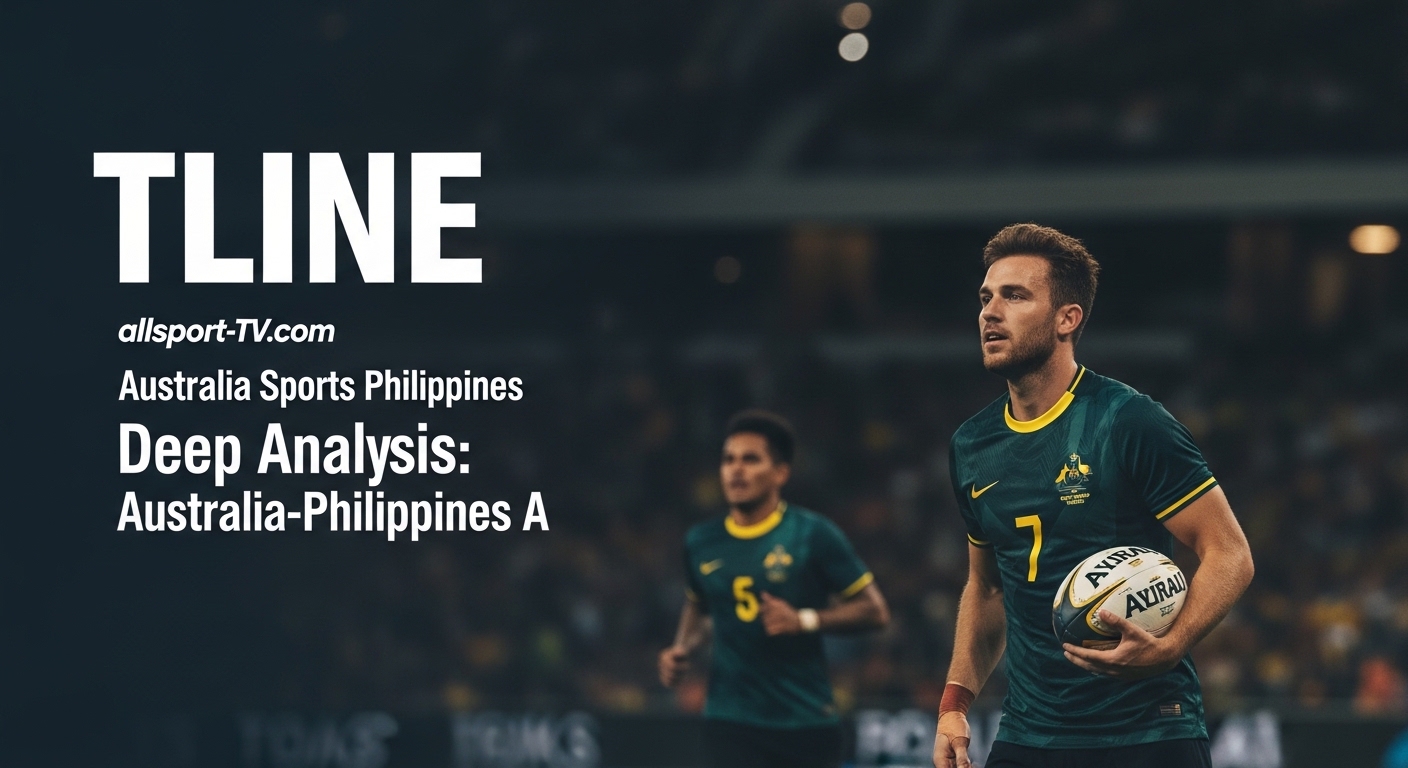
Graphic showing Australia vs Philippines AFC matchups with tactical overlays and regional map for Philippine audience
Updated: April 16, 2026
For australia Sports Philippines readers, this deep, data-driven analysis examines the evolving dynamic between Australia’s dominant national team and the Philippines as they try to translate potential into results in AFC competitions. The Philippines’ program has grown from a developing project to a credible regional challenger, while Australia maintains world-class standards and a modern professional footprint. The cross-border implications stretch beyond the pitch, tilting broadcast, sponsorship, and youth development in this part of Southeast Asia.
Context: Australia’s Standard and Philippines Rising Challenge
Australia’s women’s program has long depended on depth, high-intensity conditioning, and a professional structure that feeds players into top leagues around the world. In recent AFC competitions, that depth is a decisive edge, allowing Australia to rotate and retain quality even when fatigue mounts deep into a tournament calendar. The Philippines, by contrast, has built momentum through coaching investment, a growing domestic league, and an expanding pool of players who move through regional academies. That combination creates a narrative where the result is less a single game and more a test of strategic consistency across cycles—tactical discipline for the Australians and structural adaptability for the Filipinas.
Beyond the numbers, the Philippines has been reshaping its institutional approach, from federation grants to youth-targeted programs, aiming to convert potential into a more reliable pipeline. This shift matters because it aligns with a regional media market that increasingly rewards stories of development as much as outcomes on the field. Australia, meanwhile, leverages a robust professional ecosystem that sustains high-level competition, player mobility, and brand partnerships that can outpace most regional rivals. The result is a narrative in which every clash is a data point in a broader arc: one side refining elite execution, the other expanding a homegrown platform for sustainable growth.
Tactics and Momentum: From the Pitch to the Screen
On the field, Australia tends to press aggressively, control tempo with possession, and exploit wing overlap to stretch defenses. Their build-up is deliberate, and transitions are crisp, yielding scoring chances that rely on precision finishing from a leading forward or late-arriving midfield runners. The Philippines pursue a more compact shape, prioritizing disciplined backlines and quick counter opportunities when space opens after turnovers. Within this framework, matches often hinge on the effectiveness of set-plays and the ability to convert half-chances into goals. The evolving tactical dynamic mirrors broader shifts in Southeast Asian women’s football, where teams increasingly prepare for the mental and physical demands of international groups, not just domestic leagues.
The Philippines’ coaching staff has emphasized structure and adaptability, using drills that simulate high-press sequences and rapid counter-punches. This work is complemented by scouting patterns that track opponents’ pressing triggers and exploitable gaps in wide channels. Australia, conversely, tests scenarios in which ball progression must withstand high-velocity challenges from multiple angles, pushing players to be decisive in two- and three-touch windows. The result is a chess match played across tempo, spacing, and risk management—where even slight shifts in pressing intensity or transition timing can redefine a half’s momentum.
Market, Media Dynamics, and the Philippine Viewership
Broadcast and streaming rights shape what audiences in the Philippines actually see, and the current moment underscores how broadcast strategies can affect participation. The best-access coverage travels through regional networks and online platforms that serve millions of fans who watch games on mobile devices, social feeds, and pay-TV packages. For the Philippine market, the challenge is to balance cost with reach: to ensure that high-quality feeds, multilingual commentary, and timely highlight packages become standard, not exceptions. Australia-Philippines matchups also feed into a broader media economy where highlight reels, tactical breakdowns, and micro-analyses drive engagement across platforms—an ecosystem that can translate into more consistent sponsorships and longer-term broadcast deals.
In practice, the Philippines benefits when leagues and federations align their media plans with the realities of digital consumption: shorter clips for social, longer strategizing pieces for in-depth channels, and clear call-to-action content that invites youth participation. This alignment matters not just for today’s viewership but for the pipeline of fans who will support the sport as it expands beyond metropolitan centers into regional towns and provinces. The multiplier effect is clear: more eyes on the game lead to more community programs, which in turn feed into stronger national teams and more compelling international matchups.
Actionable Takeaways
Expand broadcast agreements to include robust, localized Philippine commentary and accessible streaming options for women’s national-team fixtures.
Strengthen grassroots programs in the Philippines by aligning with schools, clubs, and community centers to broaden the talent pipeline and create clearer routes to national-team eligibility.
Develop targeted marketing and sponsorship plans that highlight women’s football, leveraging digital platforms to reach younger demographics in the Philippines.
Invest in coaching education and data-driven scouting to close the gap between the Philippines’ rising talent and Australia’s established professional ecosystem.
Encourage cross-border youth exchanges and regional tournaments to accelerate development and heighten competitive benchmarks for Philippine players against top opponents.