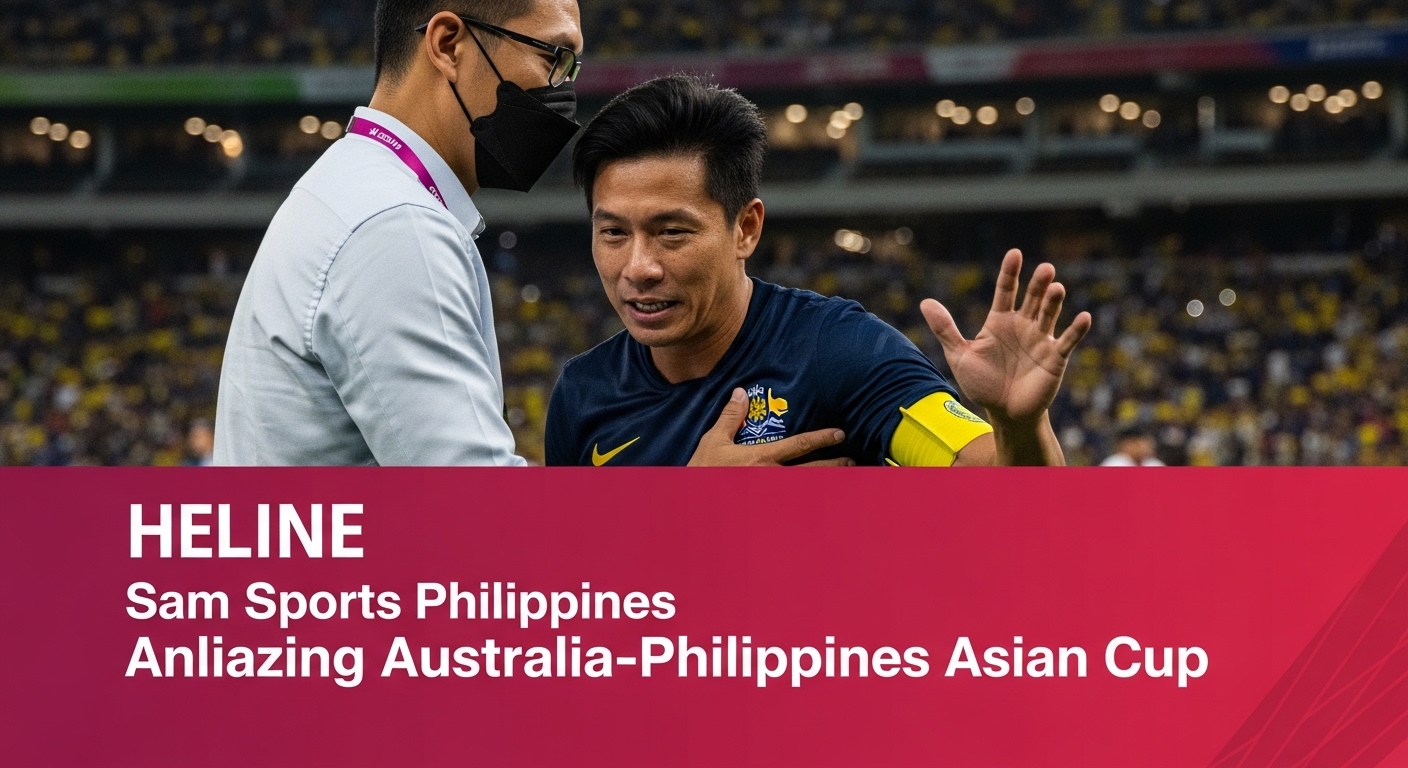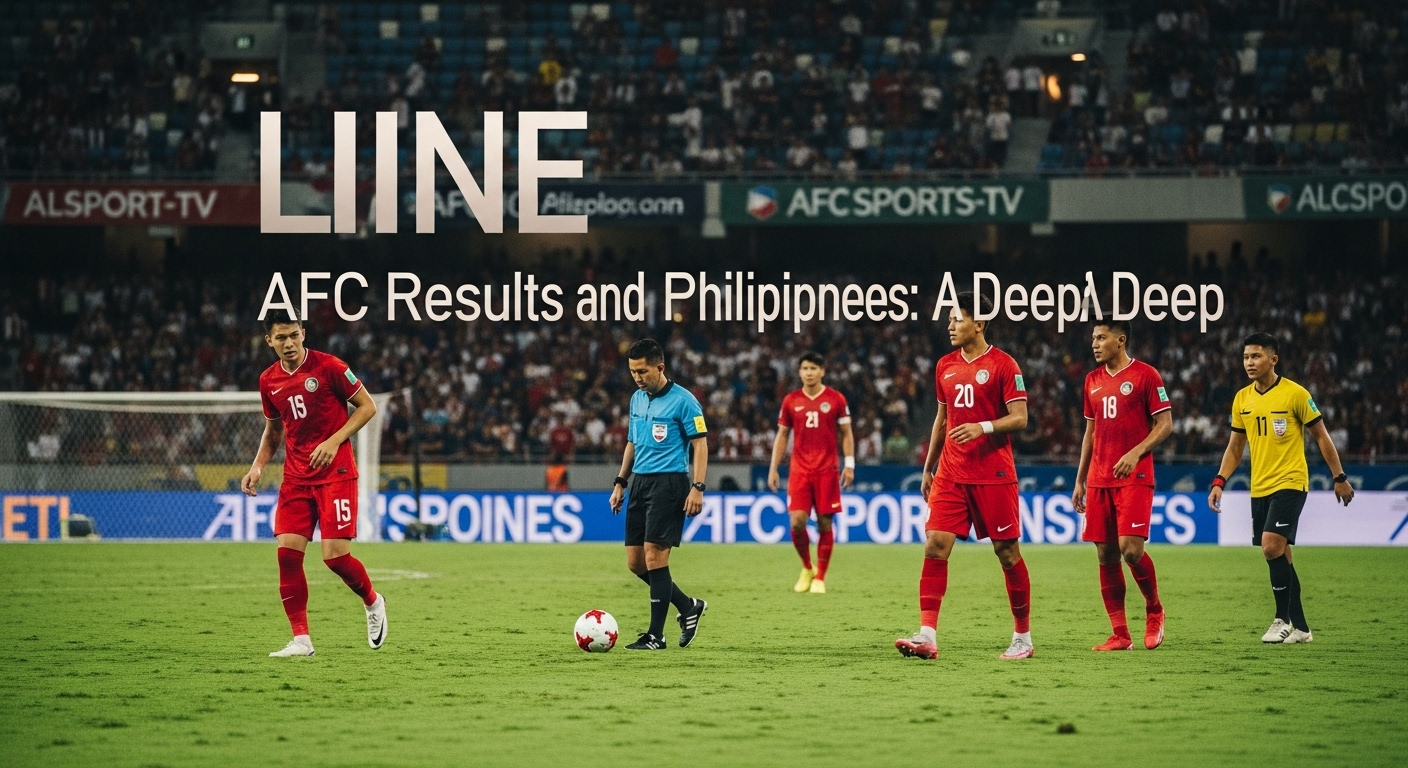
Beyond the scoreboard, AFC results are shaping the direction of football in the Philippines, and afc Sports Philippines is increasingly central to conversations about development, investment, and fan engagement. The recent AFC Women’s Asian Cup encounter saw Australia edge the Philippines 1-0, a result that, while painful, offers a diagnostic map for growth and strategy. For Philippine planners, the lesson is not simply about the scoreline but about how the national program translates short-term results into long-term capacity—talent, coaches, and domestic competition that can challenge Asia’s elite over time.
Setting the Stage: AFC’s continental framework and Philippine ambitions
The Asian Football Confederation has rebuilt women’s continental competition into a more competitive, high-stakes arena. The AFC Women’s Asian Cup functions not only as a regional championship but as a crucial gateway to FIFA World Cup qualification, ranking teams by a mix of group-stage performance, tactical diversity, and players who can operate under pressure on big stages. For the Philippines, ambition rests on translating measured gains in youth development and domestic play into consistent performances against stronger sides from Australia, Japan, and South Korea. The disruption of a single match against a continental heavyweight is not a defeat of long-range planning but a stress test for the system: coaching acumen, player depth, exposure to varied tactical styles, and the reliability of the talent pipeline that feeds the national team.
In practical terms, the Philippines must balance immediate match-readiness with sustained investment in youth academies, coaching education, and competition exposure. The AFC’s calendar—with qualifiers, friendlies, and age-group tournaments—offers frequent, tangible data points: how players perform when pressed by press, how teams recover after conceding, and how substitutions shift momentum. The strategic implication for afc Sports Philippines is clear: success will hinge on scaling domestic competitiveness so that the national team can draw on a larger pool of players who can meet the physical and tactical demands of elite AFC play.
From heartbreak to blueprint: Philippines women’s progress and the AFC landscape
The 1-0 result against Australia underscored the gulf in depth but also highlighted a blueprint for progress. Where the Matildas bring an established culture of high-intensity pressing and finishing precision, the Filipinas are increasingly learning to manage space, compensate for gaps in aerial duels, and convert chances at critical moments. The underlying trend in AFC competition is a move toward more sophisticated, multi-phased defenses and faster transitions—elements that require more specialized training and more frequent competitive fixtures for Philippine players.
Progress is not measured solely by results; it is measured by how quickly players adapt to new tactical ecosystems. For the Philippines, this means cultivating a cadre of coaches who can design flexible game plans, conducting technical-skill work that translates from training to match-day application, and expanding the pool of players who can contribute from multiple positions. The AFC landscape rewards versatility: wing-backs who can both defend high and support attacks, strikers who can create opportunities from tight spaces, and midfielders who can link defense to offense under pressure. The Philippines’ ability to deliver on these demands will influence whether future campaigns see closer scorelines and, eventually, more points.
Key bottlenecks persist—physicality at the pace of AFC teams, finishing quality when chances arise, and the consistency of set-piece execution. Yet the long view is constructive: every international appearance, every goal-scoring drill against different attacking profiles, and every scouting report that informs youth coaching contributes to a more robust player development arc. The AFC structure rewards systematic growth, and the Philippines’ path is best described as incremental capacity-building: more training hours, better scouting, and stronger partnerships between national teams, domestic leagues, and educational institutions that can sustain a pipeline of players who graduate to national duty with confidence.
Media, markets, and the Philippine fan base: opportunity and risk
Broadcast accessibility and fan engagement are increasingly critical to translating on-field progress into sustainable support. The Philippines possesses a dynamic media environment where streaming platforms, social media, and live event coverage shape public interest as much as the final score. For afc Sports Philippines, the challenge is to secure reliable broadcast rights and to present women’s football as a viable product with predictable scheduling, compelling narratives, and data-driven storytelling that can attract sponsors. When fans can follow a match in real time, access post-match analysis, and participate in interactive discussions, the sport’s market viability improves, which in turn attracts corporate partners and broader youth participation.
Operationally, diversification of distribution channels matters. A multi-platform approach—live streaming, highlight reels, and localized content in Filipino languages and English—helps reach diverse audiences, from urban fans with stable internet connections to students in campuses who consume bite-sized analyses. The risk, of course, is over-reliance on a single broadcaster or a single platform that could leave viewers with intermittent access. A resilient strategy combines partnerships with local networks, robust digital distribution, and a schedule that aligns with school and work rhythms for a young Philippine audience that consumes sports content on mobile devices.
In this environment, afc Sports Philippines can leverage data and storytelling to strengthen the brand of Philippine women’s football. Compelling profiles of players, insights into training regimes, and accessible explainers on tactical concepts can elevate viewer understanding and interest. A focused emphasis on developing a domestic league as a platform for talent to mature—while also offering players adaptive experiences against AFC-level competition—could convert short-term heartbreak into a long-run asset for the country’s football ecosystem.
Actionable Takeaways
- Intensify grassroots and school-level programs to widen the player pool, with a specific emphasis on technical fundamentals and game intelligence for girls from a young age.
- Expand and regularize domestic women’s leagues and development squads, linking them with national-team scouting to shorten transition times to international play.
- Forge long-term sponsorships and broadcast partnerships that ensure predictable exposure, multi-platform distribution, and youth-focused storytelling around the national team.
- Invest in data analytics and performance analysis teams to translate match footage into actionable training plans and to benchmark progress against AFC peers.
- Prioritize coaching education and exchange programs with AFC members to accelerate tactical adaptability and player development pathways for women’s football.