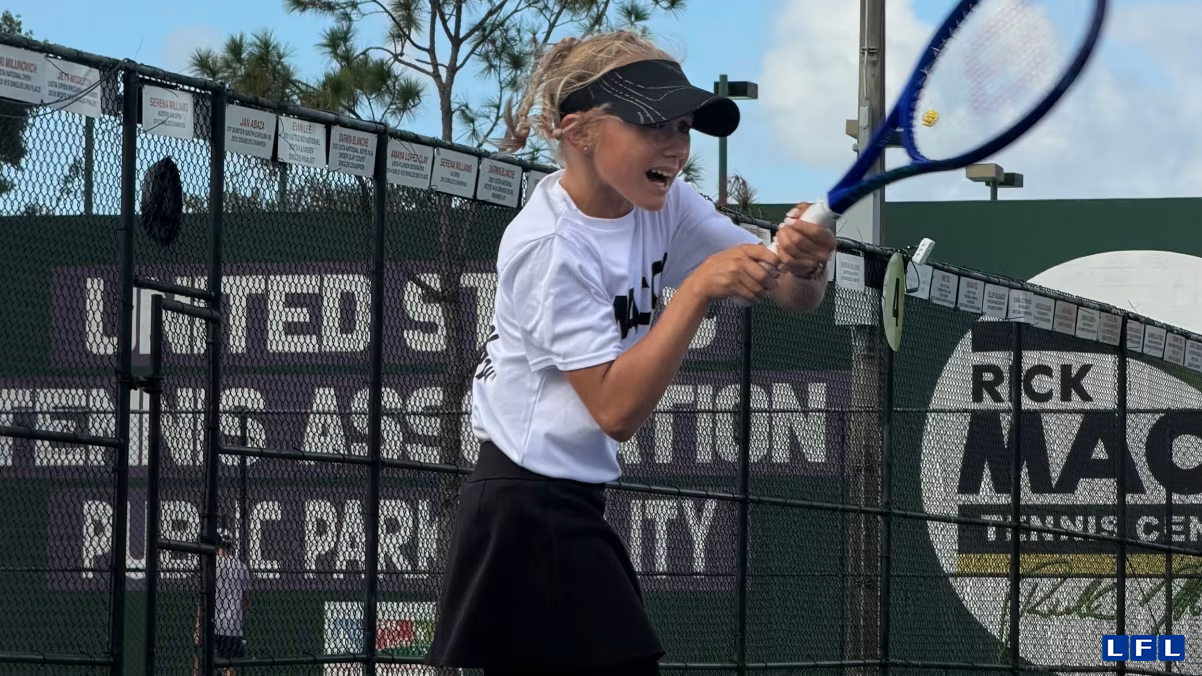
alex Sports Philippines watches closely as Alex Eala lines up her Indian Wells bid, a moment that highlights not only a young player’s pressure but also the country’s evolving approach to nurturing talent on the world stage. The matchups, the crowd, and the stakes at a premier hardcourt event illuminate a broader conversation about how the Philippines translates junior success into sustained presence on the global tennis map. For Filipino fans, the moment is as much about national pride as it is about practical pathways for athletes who seek international relevance while returning value to domestic programs.
Indian Wells as a proving ground for a rising talent
Indian Wells is often described as a mini-Grand Slam in terms of the level of competition, the quality of the surface, and the mental sharpness required to advance. For a player like Eala, the event serves not merely as a weekend spotlight but as a critical test of structural readiness: match fitness, tactical flexibility on different surfaces, and the ability to sustain focus across a demanding eight-figure tournament draw. Preliminary reports suggest Eala earned a bye into the early rounds, with a potential second-round test against veteran Zhang Shuai or the dynamic Dayana Yastremska. Such a draw places a premium on adaptability: mixing aggressive baseline play with patience when the court speeds or the wind shift in the desert conditions. The outcome on this stage can influence how young talents are perceived back home and how much faith sponsors and national bodies place in early-stage talent pipelines.
Building the Philippine tennis pipeline: youth, schools, and grassroots
Beyond a single tournament appearance, the Philippines faces a longer-running question: how to build a scalable pipeline that can produce more players capable of competing abroad without losing sight of domestic development. Critics and supporters alike agree that sustained progress demands a multi-pronged approach. That means partnerships with schools to embed tennis into physical education, the expansion of community clubs in urban and rural areas, and a network of local coaches who can deliver standardized training while adapting to regional realities. In practical terms, that translates to more structured competition calendars, scholarships for promising players to train and compete overseas, and guaranteed access to high-quality equipment and facilities. The challenge is not merely talent identification but ensuring that opportunities are repeated and reinforced across cohorts, so today’s breakout is not a one-off but the beginning of a durable pipeline that can feed the national team and inspire the next generation of players to pursue international exposure without compromising their homegrown development.
Policy momentum and funding: naturalization and beyond
Sports policy in the Philippines often travels in cycles, driven by global competitiveness imperatives and domestic political dynamics. Recent discussions around naturalization in other sports, notably basketball, underscore a broader willingness to explore rapid enhancement strategies while balancing long-term capacity-building. Senate discussions and public commentary suggest a renewed appetite for evaluating how foreign-born talent can accelerate national prestige—yet such approaches carry risks if domestic foundations lag. For tennis and other individual sports, the implication is clear: naturalization can be a supplementary tool, but it cannot substitute for a reliable, well-funded framework that develops local players from the ground up. In this sense, policy momentum should aim to align funding with concrete programs—coaching education, youth academies, performance analytics, and international exposure—so that a momentary influx of foreign players complements, rather than substitutes for, homegrown progress.
The risk-and-reward matrix for Filipino sports narratives
When a young athlete from the Philippines breaks into a global event, the country benefits in several cascading ways: heightened media attention, increased participation in grassroots programs, and a clearer case for strategic investments in training infrastructure. Conversely, a disappointing showing can test patience and expose bottlenecks in the domestic ecosystem. The deeper bet is on creating a coherent narrative where one player’s early success catalyzes a broader culture of sport excellence—without over-reliance on singular heroes. If Eala pushes deeper into the Indian Wells draw, expect a temporary surge in sponsorship interest, a spike in junior enrollment, and policymakers revisiting funding allocations toward tennis facilities and coaching networks. If the result is more modest, the experience still informs clearer timelines for performance benchmarks and underscores the need for sustained, data-driven development rather than expedient, one-off interventions.
Actionable Takeaways
- Scale youth tennis: invest in school partnerships, community clubs, and accessible equipment to widen the base of aspiring players.
- Institutionalize international exposure: create a national calendar of junior-to-pro pathways with defined milestones and support for travel and coaching.
- Secure multi-source funding: combine government grants, private sponsorships, and philanthropic support to ensure continuity beyond short-term cycles.
- Strengthen coaching pipelines: certify and distribute coaches regionally to raise the quality of training from a young age and reduce regional disparities.
- Balance policy tools: view naturalization as a strategic option that complements domestic development rather than replacing it.
- Leverage media narratives: tell sustained stories of up-and-coming players and domestic programs to sustain public interest and sponsorship momentum.