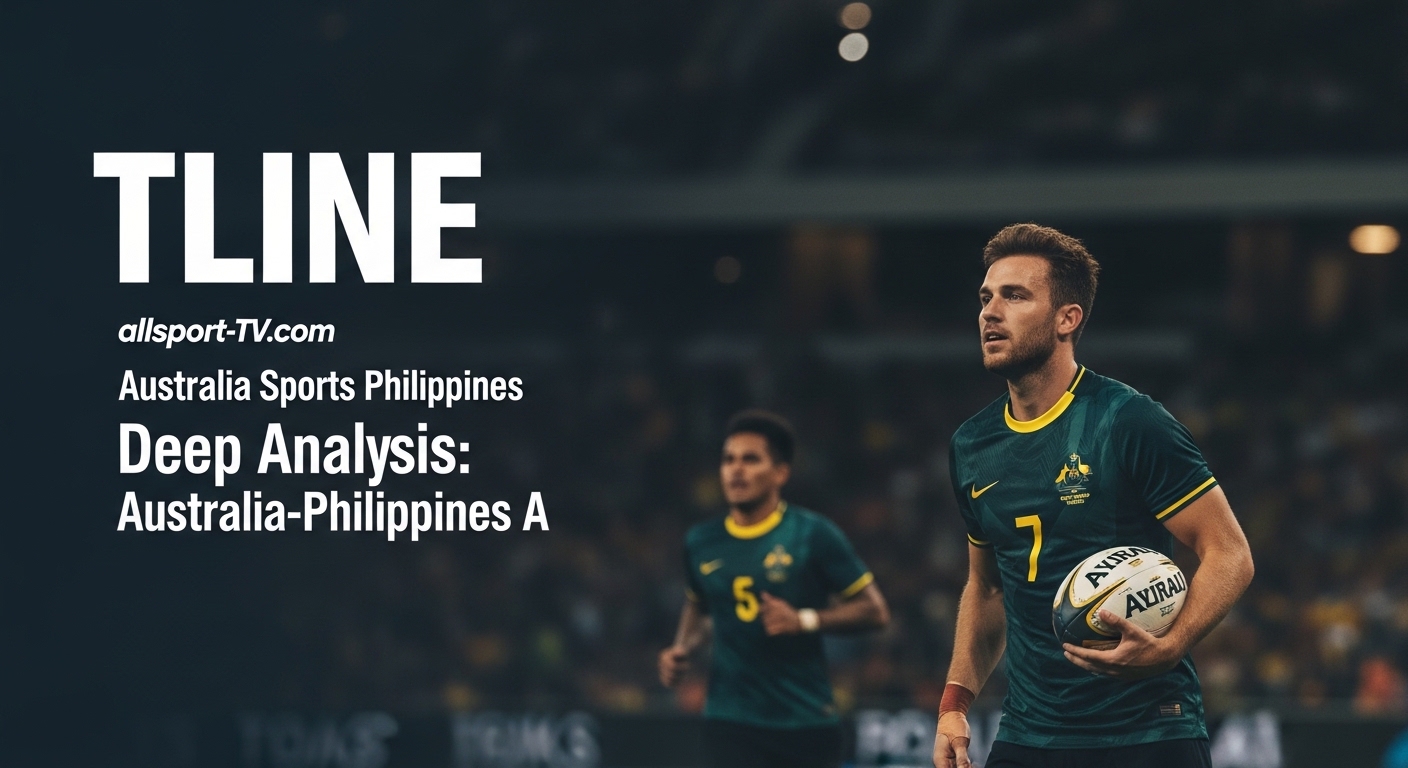
Across the AFC Asia Cup cycle, the cross-border ties between Australia and the Philippines have become more than a talking point for fans in the Philippines. The term australia Sports Philippines has emerged as a shorthand for the evolving dynamic between two football ecosystems—one a continental heavyweight, the other a rising regional program. This analysis examines how those links influence development pipelines, exposure in media, and tactical priorities on the pitch. By tracing funding patterns, youth pipelines, and broadcast strategies, we can sketch how the next phase of this relationship could shape opportunities for players, coaches, and communities on both sides of the Pacific.
Context: Australia-Philippines Rivalry in Asia’s Women’s Football
The Philippines women’s national team, known as the Malditas, has faced the Matildas in AFC contexts for years. Australia, a long-standing powerhouse, has built a pipeline of professional players and a competitive domestic league that translates into strong performances in Asia Cup campaigns. For Filipino fans, the practical questions go beyond wins and losses: how does a heavier opponent translate into faster development at home, and can the Philippines harness its diaspora to expand funding and participation?
Development, Exposure, and the Market in the Philippines
In the 2020s, the equation of growth has leaned on domestic investment, youth programs, and new broadcasting or streaming options that connect Philippine communities to regional matches. The Philippines Football Federation has sought to raise coaching standards and create clearer pathways from school and club football into national-team duty, while Australia’s presence helps expose Filipino players to higher levels of training, nutrition, and match preparation. That exposure has real consequences: better skill transference at club level, more compelling highlights for social media, and a more credible platform for sponsors to engage with women’s football in the Philippines.
Tactical and Talent Implications for the AFC Asia Cup
From a tactical vantage, the Philippines will confront a team with depth, mobility, and physicality. The path forward for Filipino programs is less about overnight revamps and more about sustainable talent development: emphasizing early technical instruction, structured youth leagues, and targeted conditioning. Australia’s example suggests a model where long-term investment in scouting, coaching education, and youth academies can yield more competitive rosters over a 4- to 6-year horizon. The narrative around stars like Sam Kerr also underscores the power of having a marquee player in early development years to attract coaching interest and sponsorship attention.
Media, Funding, and Fan Engagement
Media coverage and audience development are central to translating on-pitch gains into tangible support. Philippine fans increasingly access AFC events through digital platforms, while diaspora audiences in Europe, the Middle East, and North America sustain a global conversation about women’s football. The australia Sports Philippines frame helps journalists and sponsors frame the story in a way that emphasizes shared growth, cultural exchange, and regional competition. If broadcasters and sponsors align around education, grassroots programs, and accessible match coverage, the spike in visibility can convert into more club-level opportunities for young players and more stable sponsorships for national teams.
Actionable Takeaways
- Pair cross-border coaching exchanges with a clear pathway from youth to national-team selection to raise the baseline of play in both countries.
- Increase Philippines broadcast availability and streaming options for AFC events to grow fan engagement and sponsor interest.
- Leverage the diaspora to establish talent pipelines and mentorship networks that support domestic clubs and national teams.
- Invest in data-driven talent identification and targeted physical development to close gaps against higher-ranked opponents.
- Align domestic league scheduling and national-team windows to maximize player availability and long-term player welfare.
Source Context
Source context and further reading:
- BBC News coverage: Sam Kerr scores first goal in 28 months as Australia beat Philippines
- WV News coverage: Australia Philippines AFC Asia Cup Women’s Soccer
- The Lufkin Daily News: Australia Philippines AFC Asia Cup Women’s Soccer
From an editorial perspective, separate confirmed facts from early speculation and revisit assumptions as new verified information appears.
Track official statements, compare independent outlets, and focus on what is confirmed versus what remains under investigation.
For practical decisions, evaluate near-term risk, likely scenarios, and timing before reacting to fast-moving headlines.