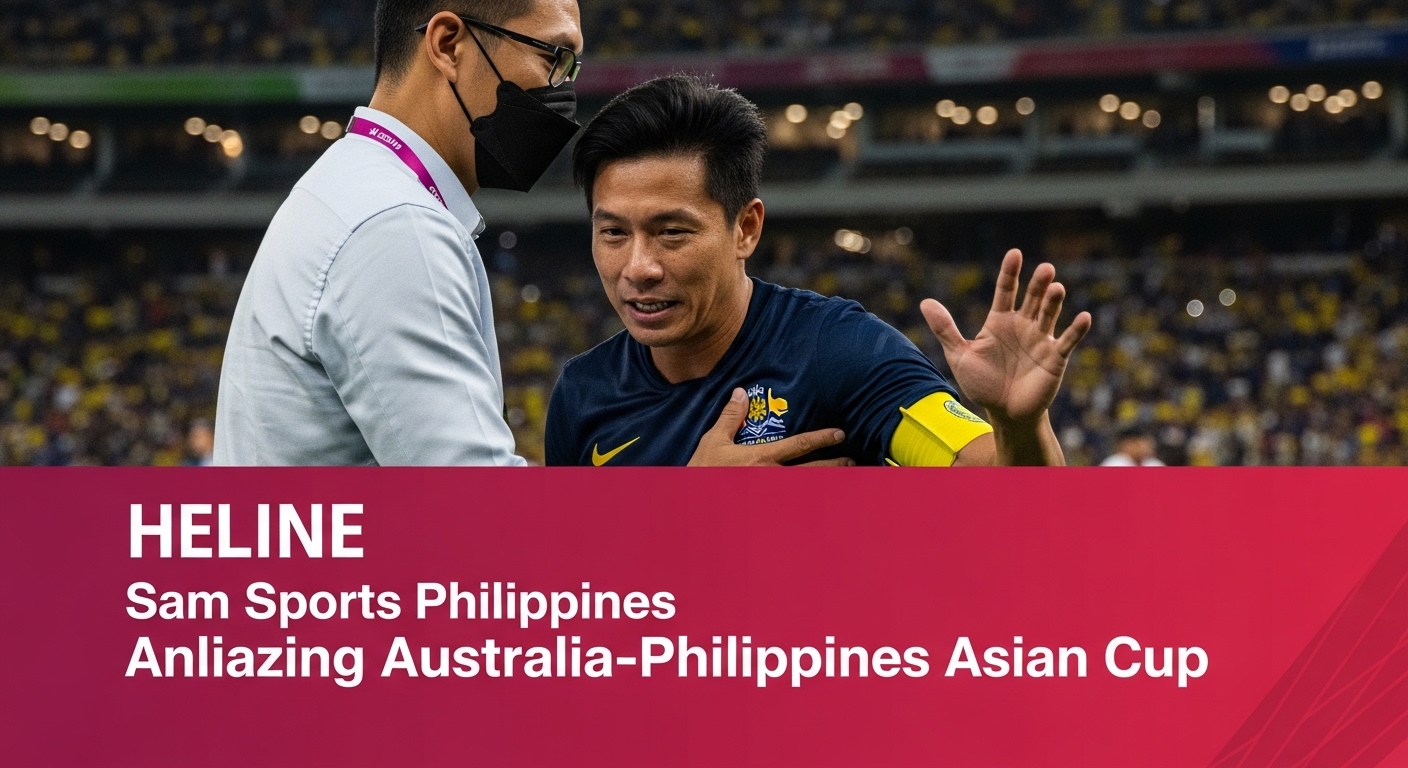
sam Sports Philippines analyzes the Women’s Asian Cup opener where Australia edged the Philippines, unpacking tactical footprints, player trajectories, and the broader arc for Philippine women’s football as the region recalibrates around new stars and rising leagues.
Context: The Philippines in the Asian Cup spotlight
Entering the tournament, the Philippines faced a benchmark match against one of the sport’s global powerhouses. The national program has emphasized skill development, leadership, and exposure to higher levels of competition, all of which influence how fans perceive the team’s potential. The match served as a litmus test for the domestic pipeline feeding into the national team, and it catalyzed conversations about facilities, coaching autonomy, and the balance between star power and depth across positions.
In a region where markets are developing at different speeds, the Philippines’ showing—whether measured in moments of resilience or tactical gaps—speaks to longer-term questions about investment, federation strategy, and the social value of women’s football as a national project.
Tactical currents: what the opener reveals about both sides
Australia’s approach combined organized spacing with decisive ball movement, leveraging elite finishing to convert half-chances into goals. For the Philippines, the contest highlighted speed in transition, disciplined positioning, and the importance of set plays as a practical route to goal against a technically superior opponent. Observers note that Kerr’s movement off the ball pulled defenders, creating space for teammates and reinforcing the critical dynamic of a modern center-forward who can orchestrate rather than merely finish.
Beyond individual moments, the match underscored how large-team systems—such as Australia’s high-press curriculum and positional rotation—translate into results even when opponents close down space. The Philippines, meanwhile, began to stress more compact lines and quick distribution to exploit slower build-up phases by the defending side, which is often a sign of a program learning to play with professional-level tactical literacy under pressure.
Narratives and implications: media, sponsorship, and player development
Media coverage around the match reflects a growing appetite for women’s football in the Philippines and the wider Southeast Asian region. Local and regional broadcasters increasingly pair match broadcasts with data-driven storytelling and post-match analysis, expanding the sport’s reach beyond urban centers. This media momentum can influence sponsorship flows, public support, and the willingness of brands to invest in female-athlete development, academies, and grassroots programs.
The result also carries implications for the Philippines’ pipeline: improved youth academies, stronger coaching education, and structured domestic leagues are now framed as prerequisites for sustained national contention. For players, the exposure to international standards elevates the benchmark and informs their training choices in club programs, national camps, and scholarship opportunities abroad.
Actionable Takeaways
- Invest in grassroots women’s football and youth academies to widen the talent pool and create a steady feed of players who can compete with regional peers over the next decade.
- Expand broadcast and streaming access for Philippine fans, including partnerships with regional networks, to sustain momentum and build audience loyalty for women’s football.
- Strengthen coach education and domestic league infrastructure to translate lessons from top teams into local play and raise the level of competition.
- Develop data-driven performance metrics, scouting networks, and mentorship programs to identify gaps, track progress, and accelerate player development.
- Promote female role models through community programs, scholarships, and school-based initiatives to boost participation and long-term support for the sport.
Source Context
Sam Kerr’s header helps Australia edge Philippines — Jacksonville Journal-Courier
Australia open Women’s Asian Cup as Sam Kerr goal defeats Philippines — Yahoo Sports Canada
From an editorial perspective, separate confirmed facts from early speculation and revisit assumptions as new verified information appears.
Track official statements, compare independent outlets, and focus on what is confirmed versus what remains under investigation.
For practical decisions, evaluate near-term risk, likely scenarios, and timing before reacting to fast-moving headlines.
Use source quality checks: publication reputation, named attribution, publication time, and consistency across multiple reports.
Cross-check key numbers, proper names, and dates before drawing conclusions; early reporting can shift as agencies, teams, or companies release fuller context.
When claims rely on anonymous sourcing, treat them as provisional signals and wait for corroboration from official records or multiple independent outlets.