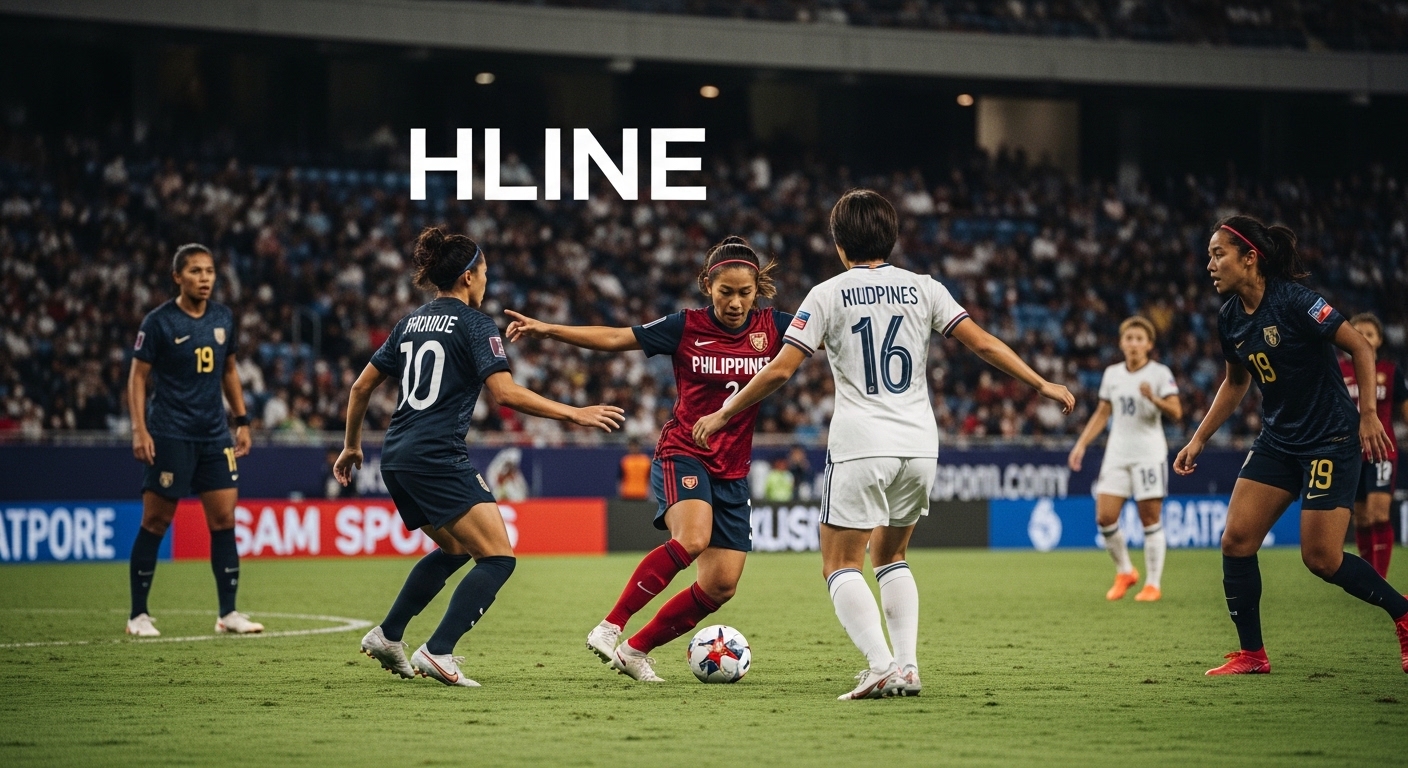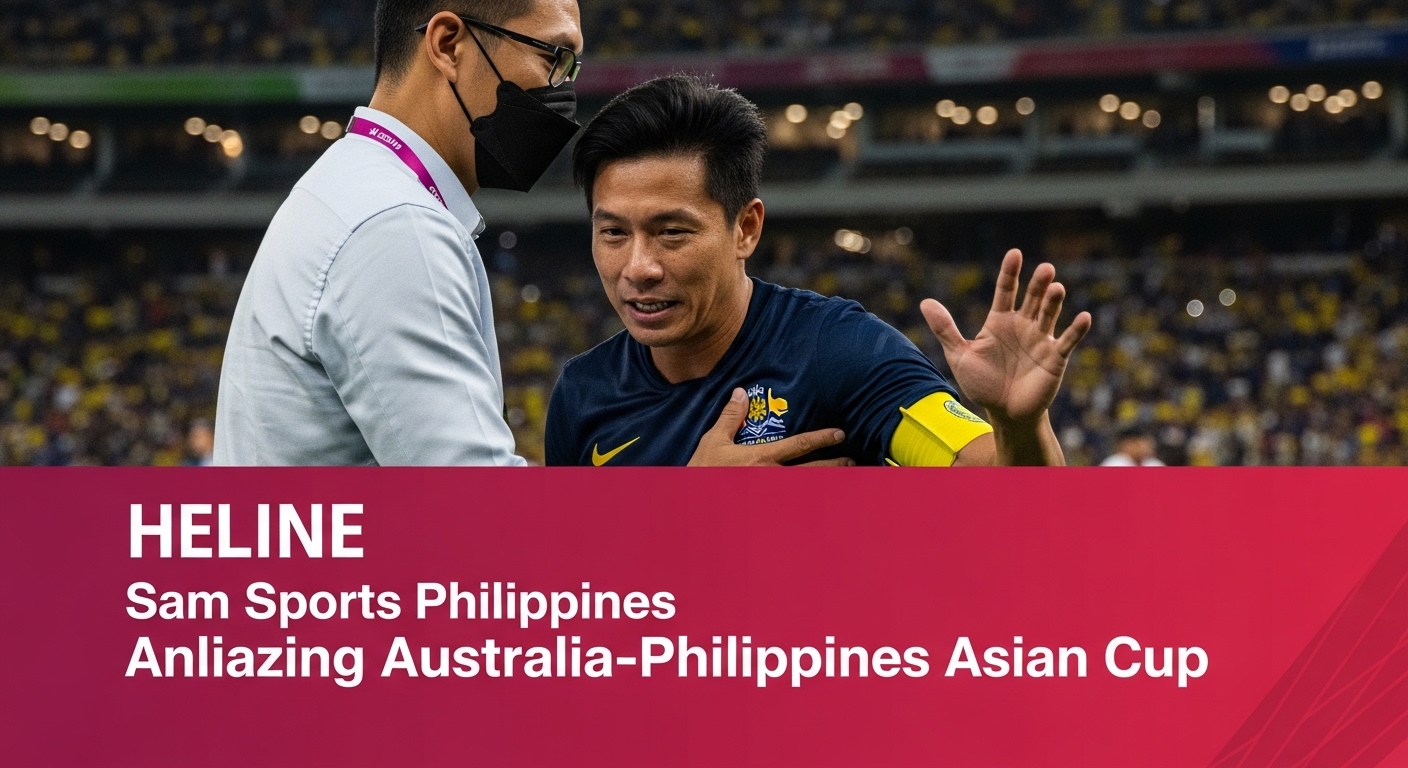
sam Sports Philippines frames the Women’s Asian Cup opener as a barometer for how far Philippine women’s football has progressed, anchored by Sam Kerr’s decisive header that shaped the result for Australia against the Philippines.
Context and Stakes
The Women’s Asian Cup is more than a single match; it is a testing ground for federation-led development strategies, youth pipelines, and the capacity of domestic programs to feed a national team that is still chasing regional parity. In the Philippines, progress in women’s football has been uneven—supported by storytelling momentum, increasing youth participation, and attempts to align local leagues with national-team needs. Australia, meanwhile, sits at the upper end of the regional ladder, boasting depth, professional environments, and a system that translates talent into consistent performance. The opening encounter thus carried layered significance: it offered a tactical benchmark against a proven unit, exposed potential vulnerabilities in a PH defense to aerial pressure and quick transitions, and provided a practical lens for assessing how Philippine planners must prioritize training, player development, and competitive exposure to close the gap.
On-field Dynamics
Witnessing Sam Kerr in the air, tracking across the frontline, and exploiting the space behind a high-pressing defense underscored the balance teams seek in modern football: control of tempo, vertical threat, and disciplined marking on set pieces. Kerr’s movement created the diagonal angles that unsettled the Philippines’ back line, while Australia’ s midfield rhythm sustained pressure through quick ball circulation. For the Philippines, the focal points were compactness, disciplined zone coverage, and timely communication to counter crosses and late runs from the box. The episode also highlighted how a single moment—an accurate header off a contested cross—can tilt a match in a coach’s tactical planning. While Philippine players demonstrated resilience in executing a compact shape, the encounter illustrated the persistent challenge of converting defensive discipline into meaningful attacking opportunities against a top-tier opponent. The lesson for PH coaches lies in translating short-term defensive gains into longer-term attacking build-up with patient ball circulation and improved decision-making under pressure.
Implications for Philippine Football
The outcome provides more than a scoreline; it signals how far Philippine football must travel in investment, governance, and cultural adoption to compete consistently with the region’s best. First, continued prioritization of grassroots programs and school-level outreach can widen the talent funnel, crucial for sustaining senior national-team profiles. Second, domestic competition needs stability, visibility, and sponsorship to produce players whose development mirrors professional systems abroad. Third, the PH program benefits from structured exposure—ranging from youth camps to regional friendlies—that accelerates tactical literacy and reduces adaptation time in high-stakes matches. Finally, the match underscores the strategic value of data-informed coaching: video analysis, fitness profiling, and position-specific drills that can convert the PH side’s discipline into more frequent scoring chances. Taken together, these factors shape a practical, incremental trajectory: invest in foundations, expand competitive opportunities, and integrate performance analytics into daily training regimens.
Strategic Scenarios
Looking ahead, several scenarios could influence how the Philippines navigates the next phase of regional competition. In the first scenario, sustained investment in coaching education, youth academies, and domestic league structure yields a gradual but tangible improvement in match control and goal creation. In a second scenario, the federation prioritizes partnering with diaspora communities and overseas-based Filipino players to broaden the talent pool, while leveraging international friendlies to calibrate tactical responses. A third scenario envisions a closer alignment between women’s development programs and other national sports initiatives, catalyzing cross-sport collaboration and sponsorship opportunities. A fourth scenario considers a measured evolution of the domestic league’s format, ensuring that clubs cultivate homegrown talent while offering pathways to national-team selection. Each pathway requires consistent funding, governance transparency, and a clear, data-driven framework to track progress and adjust plans as regional competition intensifies.
Actionable Takeaways
- Prioritize defensive organization on set pieces and aerial threats with specialized coaching modules.
- Invest in goalkeeper development and shot-stopping analytics to raise backline resilience under pressure.
- Grow the domestic women’s league with accurate scheduling, sponsor engagement, and youth-to-senior player pipelines.
- Establish data-driven scouting focusing on local talent, diaspora players, and collegiate programs to diversify the pool.
- Implement fitness, injury-prevention, and load-management strategies to sustain performance across back-to-back fixtures.
- Foster international collaborations and friendlies to accelerate tactical adaptation and exposure to higher levels of play.